The tech competition in the USA is so strong that the success of all projects depends on the quality of talent you hire. However, hiring a single bad talent can cost your company up to 30% of the employee’s salary in the first year, especially in the case of a startup. This causes a ripple effect, resulting in reduced productivity, interrupted team dynamics, and delays in the project delivery. This is where you need a vetting process that does not act as a formality but protects your team strategically from hiring unsuitable talent.
If your candidate vetting process is well-defined and properly structured, it can help you hire senior-level talent that suits your requirements the best. That is why, at Nextbridge, we have a strong and smooth screening process through which we hire on your behalf. As a result, you not only remain worry-free from hiring the experienced professional but also focus on the core business functions.
In this blog, we will discuss our vetting process. Let’s first understand what is vetting process and its importance.
What is a Vetting Process and Why is it Important?
In a vetting process, an employer checks the background of candidates, verifies the truth, and ensures the information and documents before making a hiring decision. In short, an employer thoroughly investigates the candidates before deciding to move forward with them. After concluding the potential employee vetting process, the employer makes a well-informed hiring decision.
If we summarize, it is a thorough process where you evaluate and investigate candidates to assess their reliability, suitability, and trustworthiness before hiring them. Now that you have understood what does vetting process mean, let’s look into its importance.
A solid plan of staff vetting procedures goes beyond the resumes through which candidates apply. Starting with a recruitment screening process, it is a multi-step evaluation where you assess skills, behavior during the interview, references, and the ability to fit in the organizational culture. So, it is important because it reduces risks related to hiring, prevents misfires that could cost you project budget and quality, and helps you hire talented individuals only.
Our Vetting Process
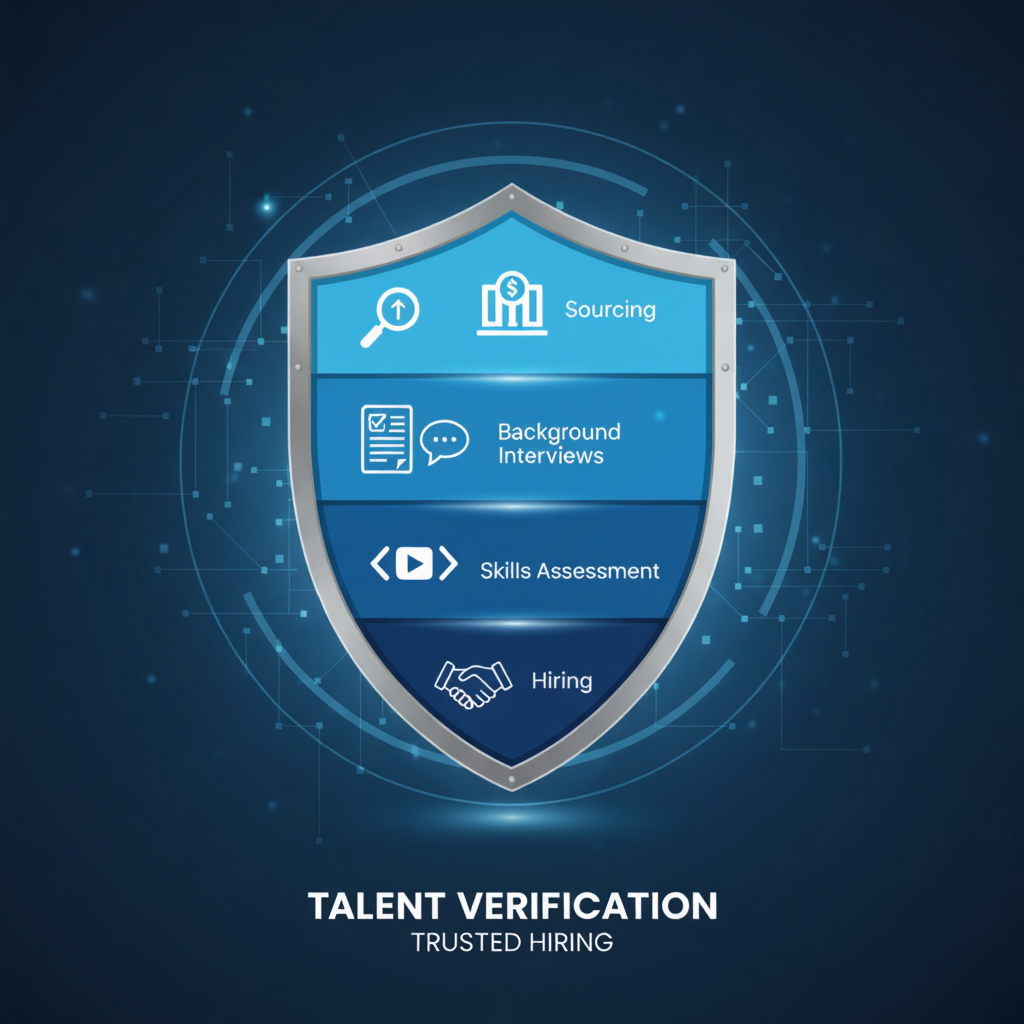
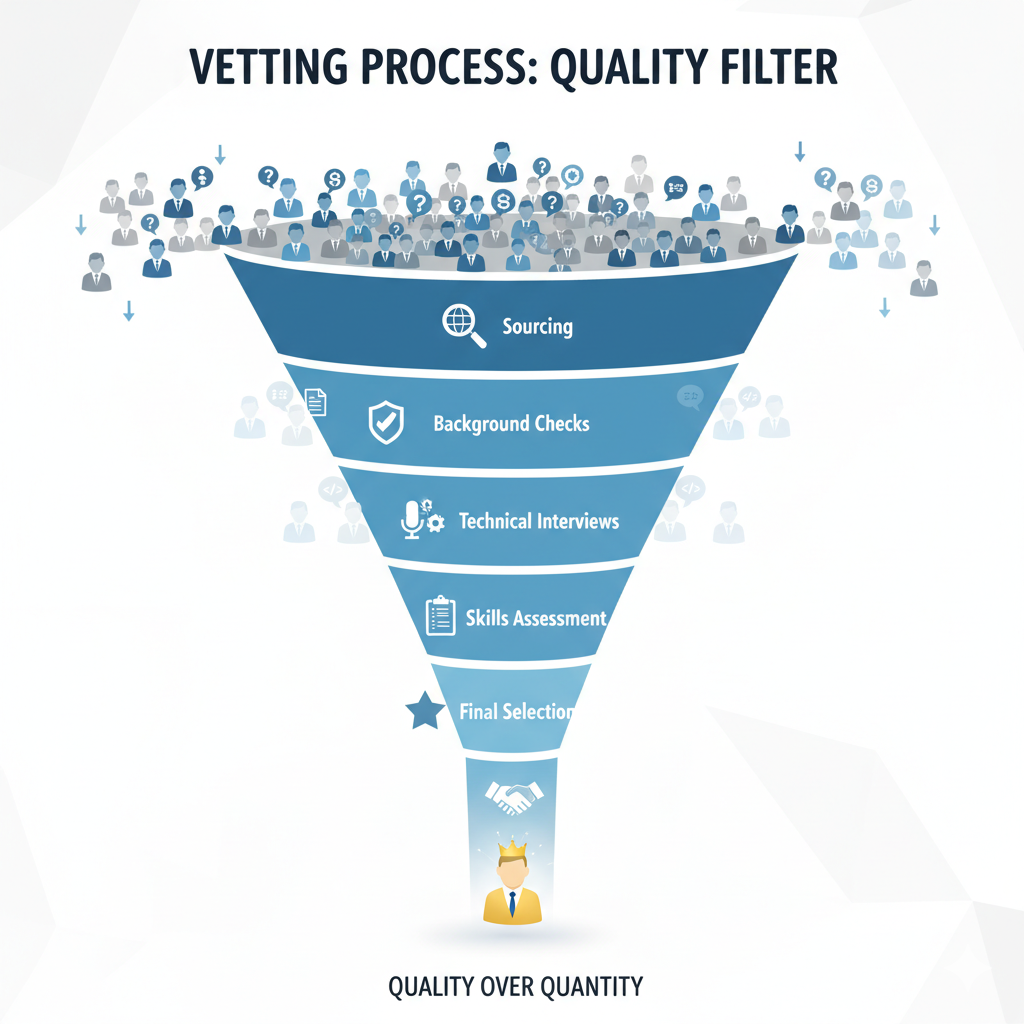
At Nextbridge, we follow a vetting plan based on multiple steps to ensure we hire only passionate and top-level talent who would love to work with clients in the USA. Let’s discuss each in detail.
- Sourcing the Top Talent
We have developed a proper criterion to source the top talent that includes the job description, defining required skills, qualifications, and experience. By doing so, we ensure that job requirements and applicant profiles are aligned. Once we receive resumes and cover letters, we review them and decide whether they are fit for the role. This is where we initiate the recruitment screening process and deeply understand the background and potential contributions of each candidate.
Next, we contact the best-suited candidates through a phone call or a video call if required, and interview them to assess how well they can evaluate. We also ensure that everything presented in the resumes and cover letters is authentic and clarifies any ambiguity.
Based on resumes, cover letters, and short remote interviews, we shortlist candidates who fit the screening criteria we have developed. We proceed with the shortlisted candidates to the next stage of the vetting process to ensure they are the right fit.
- Performing the Background Checks
In the next phase of the employee vetting process, we thoroughly review the backgrounds of the shortlisted candidates. While doing so, we verify :
- Candidate’s identity: National Identity Card
- Details of the employer: Name and location
- Employment history: job titles, employment dates, reasons for leaving, working attitude, recognitions, and achievements (if any)
- Educational details
- Social media presence
- References
Conducting these detailed evaluations helps us make informed decisions, minimizing the risk of mis-hiring.
- Conducting Interviews and Assessment
Once we complete the initial screening and verification of the candidates, we schedule their in-person structured interviews, followed by assessments in the organization setting, and call them to appear. Such interviews not only help us assess candidates’ skills and expertise but also ensure their attitude and behavior are fit for the role.
We initiate the interview by asking candidates basic questions to make them feel comfortable and at ease. As we proceed, we ask them to share their past experiences in real-life scenarios to know their thought process and problem-solving approach.
To assess their technical skills, we do not rely on documents or verbal commitments only.
We evaluate the candidates based on:
- Technical knowledge
- Problem-solving abilities
- Practical skill sets
- Tech proficiency
- Coding-based challenges
- Logical reasoning
- Security and awareness practices
In this phase, we also ensure they can handle the workload and meet the deadlines without compromising the quality of work.
- Finalizing the Hiring Decision and Offering a Job
Finally, candidates who clear in-person interviews and assessments make it to the end, and we make the hiring decision by offering them a job through phone call and email. We share every little detail with them, including the salary package, fixation after probation, perks and benefits, job description, reporting manager, leaves, and more.
We encourage candidates to be open about negotiating terms if necessary. Once they agree to be Nextbridge’s employees, we ensure that they sign an NDA (non-disclosure form) to keep the company’s and clients’ confidential information safe. This is how we hire only senior-level talent for US clients through our vetting process, and then their onboarding journey starts.
Conclusion
If we summarize, the tech world is so rapidly changing that you do not have time, and you can not afford to hire the wrong talent, which causes a ripple effect down towards your projects. That is why a well-defined vetting process is important to ensure you hire only reliable, qualified, skilled, and top-level talent. At Nextbridge, we take responsibility for hiring the right resource, with transparency and precision at each step.
Now you are well aware of what does vetting mean in business, and why it is important for your business. It is time to collaborate with us and forget about hiring for your projects. Next time you need talented resources for your ongoing and upcoming projects, developing long-term relationships with your clients, and ensuring business growth, you know who to contact.